The Hidden Cost of Manual Structural Calculations
News & Insights
3:30 Min Read
Manual structural calculations slow down projects, introduce avoidable errors, and create hidden costs for engineers, firms, and clients.
Why Manual Calculations Still Dominate Residential Engineering
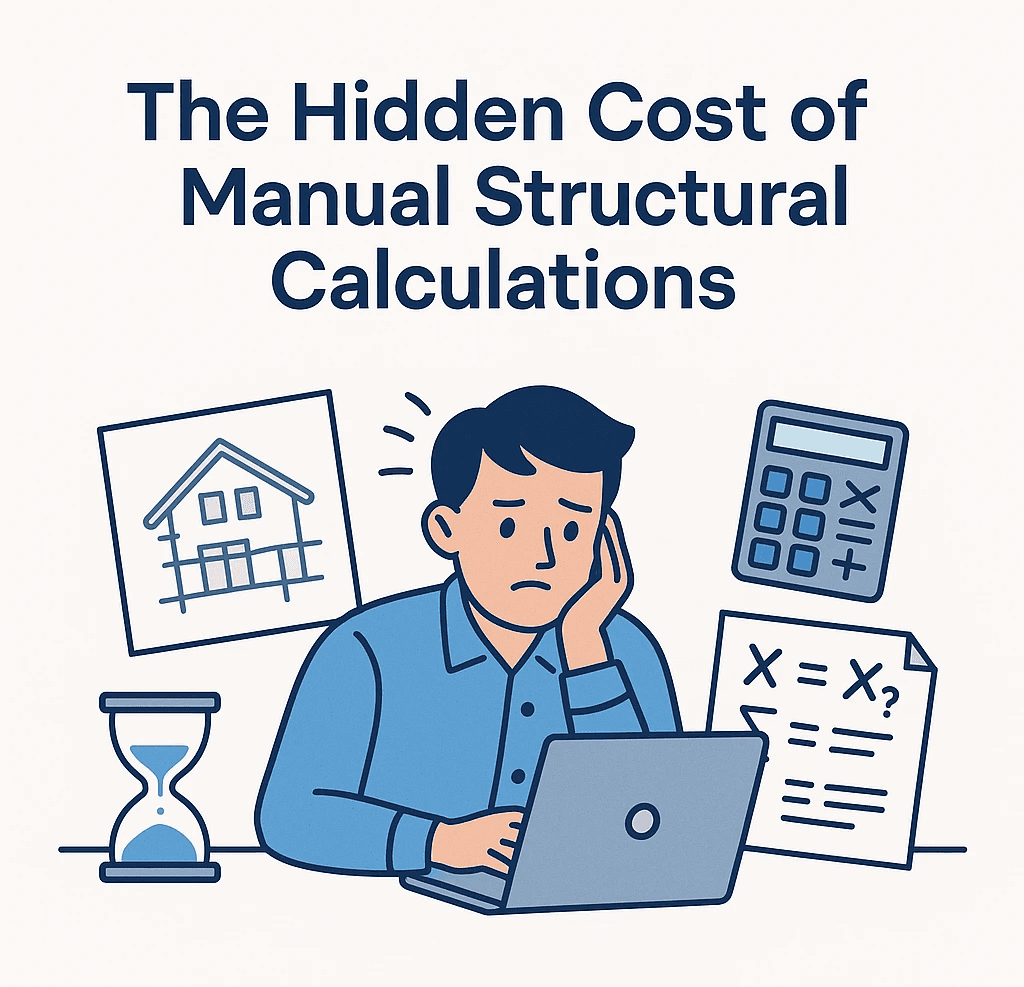
Despite advances in digital tools, many residential structural designs still rely on manual methods or a patchwork of spreadsheets, hand calculations, and markups. For small projects, this approach might seem harmless. In practice, it can introduce delays, create inconsistency, and add significant overhead to each design.
Engineers often repeat the same tasks project after project: tracing load paths, working through moment and shear checks, recalculating member capacities, and documenting every step again from scratch. This repetition may feel routine, but it quietly consumes hours that could be spent on higher value engineering work.
Small Errors Lead to Big Consequences
Manual calculations are not just slow. They are naturally vulnerable to error. A misplaced load, a mistyped value, or an outdated assumption can cascade through a design and go unnoticed until late in the process. These small slips can cause:
Incorrect member sizing
Conflicting information between drawings and calculations
Extra RFIs from councils
Construction delays or rework
A loss of confidence in the documentation
Because many calculations live in spreadsheets or notes, it can be difficult to trace how a result was reached or whether the logic behind it is still correct.
When Workflows Do Not Connect, Costs Grow
Residential projects often change as architects adjust layouts, clients refine their requirements, or site conditions become clearer. In a manual workflow, every change has a knock on effect. Engineers must revisit previous assumptions, update calculations, and ensure that all documentation reflects the new design.
If even one part of the workflow is missed, drawings become misaligned with the calculations or the consent documentation. These inconsistencies lead to RFIs, more correspondence with councils, and more time spent finding and correcting issues that should have been prevented.
These hidden costs accumulate across every project and every year.
How Nodey Reduces Manual Work and Hidden Costs
Nodey was created to reduce the workload created by manual and repetitive calculations. Instead of working across separate tools, engineers can mark up structural elements directly on the drawing and have Nodey detect the load paths, run the engineering checks, and size the members automatically.
Because Nodey keeps the drawings, analysis, and documentation connected, updates flow through the entire project instantly. If a wall moves or a span changes, the affected members, calculations, and reports adjust in real time.
This prevents:
Repeating the same calculations
Copying values between tools
Inconsistencies between drawings and reports
Avoidable RFIs caused by misalignment
Most importantly, Nodey ensures that each calculation step is traceable. Engineers can see the logic, the assumptions, and the code references used in the analysis, making reviews smoother and more transparent.
Focusing Engineering Time Where It Matters
Automating routine calculations does not reduce the importance of the engineer. Instead, it allows engineers to spend more time on design judgment, coordination, and problem solving. When the basics are handled efficiently, engineers can contribute more value and deliver better project outcomes.
Manual methods may feel familiar, but they come with hidden costs that grow over time. A connected and automated approach is not just faster. It is clearer, safer, and better aligned with how modern residential design should work.
Join our newsletter list
Sign up to get the most recent blog articles in your email every week.
Similar Topic